In probability theory and statistics, the Markov property is the memoryless property of a stochastic process, which means that its future evolution is independent of its history. It is named after the Russian mathematician Andrey Markov. The term strong Markov property is similar to the Markov property, except that the meaning of "present" is defined in terms of a random variable known as a stopping time. The term Markov assumption is used to describe a model where the Markov property is assumed to hold, such as a hidden Markov model. A Markov random field extends this property to two or more dimensions or to random variables defined for an interconnected network of items. An example of a model for such a field is the Ising model. A discrete-time stochastic process satisfying the Markov property is known as a Markov chain. == Introduction == A stochastic process has the Markov property if the conditional probability distribution of future states of the process (conditional on both past and present values) depends only upon the present state; that is, given the present, the future does not depend on the past. A process with this property is said to be Markov or Markovian and known as a Markov process. Two famous classes of Markov process are the Markov chain and Brownian motion. Note that there is a subtle, often overlooked and very important point that is often missed in the plain English statement of the definition: the statespace of the process is constant through time. The conditional description involves a fixed "bandwidth". For example, without this restriction we could augment any process to one which includes the complete history from a given initial condition and it would be made to be Markovian. But the state space would be of increasing dimensionality over time and does not meet the definition. == History == == Definition == Let ( Ω , F , P ) {\displaystyle (\Omega ,{\mathcal {F}},P)} be a probability space with a filtration ( F s , s ∈ I ) {\displaystyle ({\mathcal {F}}_{s},\ s\in I)} , for some (totally ordered) index set I {\displaystyle I} ; and let ( S , Σ ) {\displaystyle (S,\Sigma )} be a measurable space. An ( S , Σ ) {\displaystyle (S,\Sigma )} -valued stochastic process X = { X t : Ω → S } t ∈ I {\displaystyle X=\{X_{t}:\Omega \to S\}_{t\in I}} adapted to the filtration is said to possess the Markov property if, for each A ∈ Σ {\displaystyle A\in \Sigma } and each s , t ∈ I {\displaystyle s,t\in I} with s < t {\displaystyle s Cognitive computing refers to technology platforms that, broadly speaking, are based on the scientific disciplines of artificial intelligence and signal processing. These platforms encompass machine learning, reasoning, natural language processing, speech recognition and vision (object recognition), human–computer interaction, dialog and narrative generation, among other technologies. == Definition == At present, there is no widely agreed upon definition for cognitive computing in either academia or industry. In general, the term cognitive computing has been used to refer to new hardware and/or software that mimics the functioning of the human brain (2004). In this sense, cognitive computing is a new type of computing with the goal of more accurate models of how the human brain/mind senses, reasons, and responds to stimulus. Cognitive computing applications link data analysis and adaptive page displays (AUI) to adjust content for a particular type of audience. As such, cognitive computing hardware and applications strive to be more affective and more influential by design. The term "cognitive system" also applies to any artificial construct able to perform a cognitive process where a cognitive process is the transformation of data, information, knowledge, or wisdom to a new level in the DIKW Pyramid. While many cognitive systems employ techniques having their origination in artificial intelligence research, cognitive systems, themselves, may not be artificially intelligent. For example, a neural network trained to recognize cancer on an MRI scan may achieve a higher success rate than a human doctor. This system is certainly a cognitive system but is not artificially intelligent. Cognitive systems may be engineered to feed on dynamic data in real-time, or near real-time, and may draw on multiple sources of information, including both structured and unstructured digital information, as well as sensory inputs (visual, gestural, auditory, or sensor-provided). == Cognitive analytics == Cognitive computing-branded technology platforms typically specialize in the processing and analysis of large, unstructured datasets. == Applications == Education Even if cognitive computing can not take the place of teachers, it can still be a heavy driving force in the education of students. Cognitive computing being used in the classroom is applied by essentially having an assistant that is personalized for each individual student. This cognitive assistant can relieve the stress that teachers face while teaching students, while also enhancing the student's learning experience over all. Teachers may not be able to pay each and every student individual attention, this being the place that cognitive computers fill the gap. Some students may need a little more help with a particular subject. For many students, Human interaction between student and teacher can cause anxiety and can be uncomfortable. With the help of Cognitive Computer tutors, students will not have to face their uneasiness and can gain the confidence to learn and do well in the classroom. While a student is in class with their personalized assistant, this assistant can develop various techniques, like creating lesson plans, to tailor and aid the student and their needs. Healthcare Numerous tech companies are in the process of developing technology that involves cognitive computing that can be used in the medical field. The ability to classify and identify is one of the main goals of these cognitive devices. This trait can be very helpful in the study of identifying carcinogens. This cognitive system that can detect would be able to assist the examiner in interpreting countless numbers of documents in a lesser amount of time than if they did not use Cognitive Computer technology. This technology can also evaluate information about the patient, looking through every medical record in depth, searching for indications that can be the source of their problems. Commerce Together with Artificial Intelligence, it has been used in warehouse management systems to collect, store, organize and analyze all related supplier data. All these aims at improving efficiency, enabling faster decision-making, monitoring inventory and fraud detection Human Cognitive Augmentation In situations where humans are using or working collaboratively with cognitive systems, called a human/cog ensemble, results achieved by the ensemble are superior to results obtainable by the human working alone. Therefore, the human is cognitively augmented. In cases where the human/cog ensemble achieves results at, or superior to, the level of a human expert then the ensemble has achieved synthetic expertise. In a human/cog ensemble, the "cog" is a cognitive system employing virtually any kind of cognitive computing technology. Other use cases Speech recognition Sentiment analysis Face detection Risk assessment Fraud detection Behavioral recommendations == Industry work == Cognitive computing in conjunction with big data and algorithms that comprehend customer needs, can be a major advantage in economic decision making. The powers of cognitive computing and artificial intelligence hold the potential to affect almost every task that humans are capable of performing. This can negatively affect employment for humans, as there would be no such need for human labor anymore. It would also increase the inequality of wealth; the people at the head of the cognitive computing industry would grow significantly richer, while workers without ongoing, reliable employment would become less well off. The more industries start to use cognitive computing, the more difficult it will be for humans to compete. Increased use of the technology will also increase the amount of work that AI-driven robots and machines can perform. The influence of competitive individuals in conjunction with artificial intelligence/cognitive computing has the potential to change the course of humankind. An HTTP cookie (also called web cookie, Internet cookie, browser cookie, or simply cookie) is a small block of data created by a web server while a user is browsing a website and placed on the user's computer or other device by the user's web browser. Cookies are placed on the device used to access a website, and more than one cookie may be placed on a user's device during a session. Cookies serve useful and sometimes essential functions on the web. They enable web servers to store stateful information (such as items added in the shopping cart in an online store) on the user's device or to track the user's browsing activity (including clicking particular buttons, logging in, or recording which pages were visited in the past). They can also be used to save information that the user previously entered into form fields, such as names, addresses, passwords, and payment card numbers for subsequent use. Authentication cookies are commonly used by web servers to authenticate that a user is logged in, and with which account they are logged in. Without the cookie, users would need to authenticate themselves by logging in on each page containing sensitive information that they wish to access. The security of an authentication cookie generally depends on the security of the issuing website and the user's web browser, and on whether the cookie data is encrypted. Security vulnerabilities may allow a cookie's data to be read by an attacker, used to gain access to user data, or used to gain access (with the user's credentials) to the website to which the cookie belongs (see cross-site scripting and cross-site request forgery for examples). Tracking cookies, and especially third-party tracking cookies, are commonly used as ways to compile long-term records of individuals' browsing histories — a potential privacy concern that prompted European and U.S. lawmakers to take action in 2011. European law requires that all websites targeting European Union member states gain "informed consent" from users before storing non-essential cookies on their device. == Background == === Origin of the name === The term cookie was coined by web-browser programmer Lou Montulli. It was derived from the term magic cookie, which is a packet of data a program receives and sends back unchanged, used by Unix programmers. === History === Magic cookies were already used in computing when computer programmer Lou Montulli had the idea of using them in web communications in June 1994. At the time, he was an employee of Netscape Communications, which was developing an e-commerce application for MCI. Vint Cerf and John Klensin represented MCI in technical discussions with Netscape Communications. MCI did not want its servers to have to retain partial transaction states, which led them to ask Netscape to find a way to store that state in each user's computer instead. Cookies provided a solution to the problem of reliably implementing a virtual shopping cart. Together with John Giannandrea, Montulli wrote the initial Netscape cookie specification the same year. Version 0.9beta of Mosaic Netscape, released on 13 October 1994, supported cookies. The first use of cookies (out of the labs) was checking whether visitors to the Netscape website had already visited the site. Montulli applied for a patent for the cookie technology in 1995, which was granted in 1998. Support for cookies was integrated with Internet Explorer in version 2, released in October 1995. The introduction of cookies was not widely known to the public at the time. In particular, cookies were accepted by default, and users were not notified of their presence. The public learned about cookies after the Financial Times published an article about them on 12 February 1996. In the same year, cookies received a lot of media attention, especially because of potential privacy implications. Cookies were discussed in two U.S. Federal Trade Commission hearings in 1996 and 1997. The development of the formal cookie specifications was already ongoing. In particular, the first discussions about a formal specification started in April 1995 on the www-talk mailing list. A special working group within the Internet Engineering Task Force (IETF) was formed. Two alternative proposals for introducing state in HTTP transactions had been proposed by Brian Behlendorf and David Kristol respectively. But the group, headed by Kristol himself and Lou Montulli, soon decided to use the Netscape specification as a starting point. In February 1996, the working group identified third-party cookies as a considerable privacy threat. The specification produced by the group was eventually published as RFC 2109 in February 1997. It specifies that third-party cookies were either not allowed at all, or at least not enabled by default. At this time, advertising companies were already using third-party cookies. The recommendation about third-party cookies of RFC 2109 was not followed by Netscape and Internet Explorer. RFC 2109 was superseded by RFC 2965 in October 2000. RFC 2965 added a Set-Cookie2 header field, which informally came to be called "RFC 2965-style cookies" as opposed to the original Set-Cookie header field which was called "Netscape-style cookies". Set-Cookie2 was seldom used, however, and was deprecated in RFC 6265 in April 2011 which was written as a definitive specification for cookies as used in the real world. No modern browser recognizes the Set-Cookie2 header field. == Terminology == === Session cookie === A session cookie (also known as an in-memory cookie, transient cookie or non-persistent cookie) exists only in temporary memory while the user navigates a website. Session cookies expire or are deleted when the user closes the web browser. Session cookies are identified by the browser by the absence of an expiration date assigned to them. === Persistent cookie === A persistent cookie expires at a specific date or after a specific length of time. For the persistent cookie's lifespan set by its creator, its information will be transmitted to the server every time the user visits the website that it belongs to, or every time the user views a resource belonging to that website from another website (such as an advertisement). For this reason, persistent cookies are sometimes referred to as tracking cookies because they can be used by advertisers to record information about a user's web browsing habits over an extended period of time. Persistent cookies are also used for reasons such as keeping users logged into their accounts on websites, to avoid re-entering login credentials at every visit. (See § Uses, below.) === Secure cookie === A secure cookie can only be transmitted over an encrypted connection (i.e. HTTPS). They cannot be transmitted over unencrypted connections (i.e. HTTP). This makes the cookie less likely to be exposed to cookie theft via eavesdropping. A cookie is made secure by adding the Secure flag to the cookie. === Http-only cookie === An http-only cookie cannot be accessed by client-side APIs, such as JavaScript. This restriction eliminates the threat of cookie theft via cross-site scripting (XSS). However, the cookie remains vulnerable to cross-site tracing (XST) and cross-site request forgery (CSRF) attacks. A cookie is given this characteristic by adding the HttpOnly flag to the cookie. === Same-site cookie === In 2016 Google Chrome version 51 introduced a new kind of cookie with attribute SameSite with possible values of Strict, Lax or None. With attribute SameSite=Strict, the browsers would only send cookies to a target domain that is the same as the origin domain. This would effectively mitigate cross-site request forgery (CSRF) attacks. With SameSite=Lax, browsers would send cookies with requests to a target domain even it is different from the origin domain, but only for safe requests such as GET (POST is unsafe) and not third-party cookies (inside iframe). Attribute SameSite=None would allow third-party (cross-site) cookies, however, most browsers require secure attribute on SameSite=None cookies. The Same-site cookie is incorporated into a new RFC draft for "Cookies: HTTP State Management Mechanism" to update RFC 6265 (if approved). Chrome, Firefox, and Edge started to support Same-site cookies. The key of rollout is the treatment of existing cookies without the SameSite attribute defined, Chrome has been treating those existing cookies as if SameSite=None, this would let all website/applications run as before. Google intended to change that default to SameSite=Lax in Chrome 80 planned to be released in February 2020, but due to potential for breakage of those applications/websites that rely on third-party/cross-site cookies and COVID-19 circumstances, Google postponed this change to Chrome 84. === Supercookie === A supercookie is a cookie with an origin of a top-level domain (such as .com) or a public suffix (such as .co.uk). Ordinary cookies, by contrast, have an origin of a specific domain name, such as ex Digital cinematography is the process of capturing (recording) a motion picture using digital image sensors rather than through film stock. As digital technology has improved in recent years, this practice has become dominant. Since the 2000s, most movies across the world have been captured as well as distributed digitally. Many vendors have brought products to market, including traditional film camera vendors like Arri and Panavision, as well as new vendors like Red, Blackmagic, Silicon Imaging, Vision Research and companies which have traditionally focused on consumer and broadcast video equipment, like Sony, GoPro, and Panasonic. As of 2023, professional 4K digital cameras were approximately equal to 35mm film in their resolution and dynamic range capacity. Some filmmakers still prefer to use film picture formats to achieve the desired results. == History == The basis for digital cameras are metal–oxide–semiconductor (MOS) image sensors. The first practical semiconductor image sensor was the charge-coupled device (CCD), based on MOS capacitor technology. Following the commercialization of CCD sensors during the late 1970s to early 1980s, the entertainment industry slowly began transitioning to digital imaging and digital video over the next two decades. The CCD was followed by the CMOS active-pixel sensor (CMOS sensor), developed in the 1990s. Beginning in the late 1980s, Sony began marketing the concept of "electronic cinematography," utilizing its analog Sony HDVS professional video cameras. The effort met with very little success. However, this led to one of the earliest high definition video shot feature movies, Julia and Julia (1987). Rainbow (1996) was the world's first film to utilize extensive digital post production techniques. Shot entirely with Sony's first Solid State Electronic Cinematography cameras and featuring over 35 minutes of digital image processing and visual effects, all post production, sound effects, editing and scoring were completed digitally. The Digital High Definition image was transferred to a 35mm negative via an electron beam recorder for theatrical release. The first digitally videoed and post produced feature was Windhorse, shot in Tibet and Nepal in 1996 on the Sony DVW-700WS Digital Betacam and the prosumer Sony DCR-VX1000. The offline editing (Avid) and the online post and color work (Roland House / da Vinci) were also all digital. The film, transferred to 35mm negative for theatrical release, won Best U.S. Feature at the Santa Barbara Film Festival in 1998. In 1997, with the introduction of HDCAM recorders and 1920 × 1080 pixel digital professional video cameras based on CCD technology, the idea, now re-branded as "digital cinematography," began to gain traction in the market. Shot and released in 1998, The Last Broadcast is believed by some to be the first feature-length video shot and edited entirely on consumer-level digital equipment. In May 1999, George Lucas challenged the supremacy of the movie-making medium of film for the first time by including footage filmed with high-definition digital cameras in Star Wars: Episode I – The Phantom Menace. The digital footage blended seamlessly with the footage shot on film and he announced later that year he would film its sequels entirely on hi-def digital video. Also in 1999, digital projectors were installed in four theaters for the showing of The Phantom Menace. In May 2000, Vidocq, which was directed by Pitof, began principal photography shot entirely using a Sony HDW-F900 camera, with the video being released in September the next year. According to the Guinness World Records, Vidocq is the first full length feature filmed in digital high resolution. In June 2000, Star Wars: Episode II – Attack of the Clones began principal photography shot entirely using a Sony HDW-F900 camera as Lucas had previously stated. The film was released in May 2002. In May 2001 Once Upon a Time in Mexico was also shot in 24 frame-per-second high-definition digital video, partially developed by George Lucas using a Sony HDW-F900 camera, following Robert Rodriguez's introduction to the camera at Lucas' Skywalker Ranch facility whilst editing the sound for Spy Kids. A lesser-known movie, Russian Ark (2002), was also shot with the same camera and was the first tapeless digital movie, recorded on HDD instead of tape. In 2009, Slumdog Millionaire became the first movie shot mainly in digital to be awarded the Academy Award for Best Cinematography. The highest-grossing movie in the history of cinema, Avatar (2009), not only was shot on digital cameras as well, but also made the main revenues at the box office no longer by film, but digital projection. Major movies shot on digital video overtook those shot on film in 2013. Since 2016 over 90% of major films were shot on digital video. As of 2017, 92% of films are shot on digital. Only 24 major films released in 2018 were shot on 35mm. Since the 2000s, most movies across the world have been captured as well as distributed digitally. Today, cameras from companies like Sony, Panasonic, JVC and Canon offer a variety of choices for shooting high-definition video. At the high-end of the market, there has been an emergence of cameras aimed specifically at the digital cinema market. These cameras from Sony, Vision Research, Arri, Blackmagic Design, Panavision, Grass Valley and Red offer resolution and dynamic range that exceeds that of traditional video cameras, which are designed for the limited needs of broadcast television. == Technology == Digital cinematography captures motion pictures digitally in a process analogous to digital photography. While there is a clear technical distinction that separates the images captured in digital cinematography from video, the term "digital cinematography" is usually applied only in cases where digital acquisition is substituted for film acquisition, such as when shooting a feature film. The term is seldom applied when digital acquisition is substituted for video acquisition, as with live broadcast television programs. === Recording === ==== Cameras ==== Professional cameras include the Sony CineAlta (F) Series, Blackmagic Cinema Camera, Red One, Arri D-20, D-21 and Alexa, Panavision Genesis, Silicon Imaging SI-2K, Thomson Viper, Vision Research Phantom, IMAX 3D camera based on two Vision Research Phantom cores, Weisscam HS-1 and HS-2, GS Vitec noX, and the Fusion Camera System. Independent micro-budget filmmakers have also pressed low-cost consumer and prosumer cameras into service for digital filmmaking. Flagship smartphones like the Apple iPhone have been used to shoot movies like Unsane (shot on the iPhone 7 Plus) and Tangerine (shot on three iPhone 5S phones) and in January 2018, Unsane's director and Oscar winner Steven Soderbergh expressed an interest in filming other productions solely with iPhones going forward. ==== Sensors ==== Digital cinematography cameras capture digital images using image sensors, either charge-coupled device (CCD) sensors or CMOS active-pixel sensors, usually in one of two arrangements. Single chip cameras designed specifically for the digital cinematography market often use a single sensor (much like digital photo cameras), with dimensions similar in size to a 16 or 35 mm film frame or even (as with the Vision 65) a 65 mm film frame. An image can be projected onto a single large sensor exactly the same way it can be projected onto a film frame, so cameras with this design can be made with PL, PV and similar mounts, in order to use the wide range of existing high-end cinematography lenses available. Their large sensors also let these cameras achieve the same shallow depth of field as 35 or 65 mm motion picture film cameras, which many cinematographers consider an essential visual tool. Codecs Professional raw video recording codecs include Blackmagic Raw, Red Raw, Arri Raw and Canon Raw. ==== Video formats ==== Unlike other video formats, which are specified in terms of vertical resolution (for example, 1080p, which is 1920×1080 pixels), digital cinema formats are usually specified in terms of horizontal resolution. As a shorthand, these resolutions are often given in "nK" notation, where n is the multiplier of 1024 such that the horizontal resolution of a corresponding full-aperture, digitized film frame is exactly 1024 n {\displaystyle 1024n} pixels. Here the "K" has a customary meaning corresponding to the binary prefix "kibi" (ki). For instance, a 2K image is 2048 pixels wide, and a 4K image is 4096 pixels wide. Vertical resolutions vary with aspect ratios though; so a 2K image with an HDTV (16:9) aspect ratio is 2048×1152 pixels, while a 2K image with a SDTV or Academy ratio (4:3) is 2048×1536 pixels, and one with a Panavision ratio (2.39:1) would be 2048×856 pixels, and so on. Due to the "nK" notation not corresponding to specific horizontal resolutions per format a 2K image lacking, for example, the typical 35mm film soundtrack space, is only 182 Bootstrap (formerly Twitter Bootstrap) is a free and open-source CSS framework directed at responsive, mobile-first front-end web development. It contains HTML, CSS and (optionally) JavaScript-based design templates for typography, forms, buttons, navigation, and other interface components. As of May 2023, Bootstrap is the 17th most starred project (4th most starred library) on GitHub, with over 164,000 stars. According to W3Techs, Bootstrap is used by 19.2% of all websites. == Features == Bootstrap is an HTML, CSS and JS library that focuses on simplifying the development of informative web pages (as opposed to web applications). The primary purpose of adding it to a web project is to apply Bootstrap's choices of color, size, font and layout to that project. As such, the primary factor is whether the developers in charge find those choices to their liking. Once added to a project, Bootstrap provides basic style definitions for all HTML elements. The result is a uniform appearance for prose, tables and form elements across web browsers. In addition, developers can take advantage of CSS classes defined in Bootstrap to further customize the appearance of their contents. For example, Bootstrap has provisioned for light- and dark-colored tables, page headings, more prominent pull quotes, and text with a highlight. Bootstrap also comes with several JavaScript components which do not require other libraries like jQuery. They provide additional user interface elements such as dialog boxes, tooltips, progress bars, navigation drop-downs, and carousels. Each Bootstrap component consists of an HTML structure, CSS declarations, and in some cases accompanying JavaScript code. They also extend the functionality of some existing interface elements, including for example an auto-complete function for input fields. The most prominent components of Bootstrap are its layout components, as they affect an entire web page. The basic layout component is called "Container", as every other element in the page is placed in it. Developers can choose between a fixed-width container and a fluid-width container. While the latter always fills the width with the web page, the former uses one of the five predefined fixed widths, depending on the size of the screen showing the page: Smaller than 576 pixels 576–768 pixels 768–992 pixels 992–1200 pixels 1200–1400 pixels Larger than 1400 pixels Once a container is in place, other Bootstrap layout components implement a CSS Flexbox layout through defining rows and columns. A precompiled version of Bootstrap is available in the form of one CSS file and three JavaScript files that can be readily added to any project. The raw form of Bootstrap, however, enables developers to implement further customization and size optimizations. This raw form is modular, meaning that the developer can remove unneeded components, apply a theme and modify the uncompiled Sass files. == History == === Early beginnings === Bootstrap, originally named Twitter Blueprint, was developed by Mark Otto and Jacob Thornton at Twitter in 2010 as a framework to encourage consistency across internal tools. Before Bootstrap, various libraries were used for interface development, which led to inconsistencies and a high maintenance burden. According to Otto: A super small group of developers and I got together to design and build a new internal tool and saw an opportunity to do something more. Through that process, we saw ourselves build something much more substantial than another internal tool. Months later, we ended up with an early version of Bootstrap as a way to document and share common design patterns and assets within the company. After a few months of development by a small group, many developers at Twitter began to contribute to the project as a part of Hack Week, a hackathon-style week for the Twitter development team. It was renamed from Twitter Blueprint to Twitter Bootstrap and released as an open-source project on August 19, 2011. It has continued to be maintained by Otto, Thornton, a small group of core developers, and a large community of contributors. === Bootstrap 2 === On January 31, 2012, Bootstrap 2 was released, which added built-in support for Glyphicons, several new components, as well as changes to many of the existing components. This version supports responsive web design, meaning the layout of web pages adjusts dynamically, taking into account the characteristics of the device used (whether desktop, tablet, mobile phone). Shortly before the release of Bootstrap 2.1.2, Otto and Thornton left Twitter, but committed to continue to work on Bootstrap as an independent project. === Bootstrap 3 === On August 19, 2013, Bootstrap 3 was released. It redesigned components to use flat design and a mobile first approach. Bootstrap 3 features new plugin system with namespaced events. Bootstrap 3 dropped Internet Explorer 7 and Firefox 3.6 support, but there is an optional polyfill for these browsers. Bootstrap 3 was also the first version released under the twbs organization on GitHub instead of the Twitter one. === Bootstrap 4 === Otto announced Bootstrap 4 on October 29, 2014. The first alpha version of Bootstrap 4 was released on August 19, 2015. The first beta version was released on August 10, 2017. Otto suspended work on Bootstrap 3 on September 6, 2016, to free up time to work on Bootstrap 4. Bootstrap 4 was finalized on January 18, 2018. Significant changes include: Major rewrite of the code Replacing Less with Sass Addition of Reboot, a collection of element-specific CSS changes in a single file, based on Normalize Dropping support for IE8, IE9, and iOS 6 CSS Flexible Box support Adding navigation customization options Adding responsive spacing and sizing utilities Switching from the pixels unit in CSS to root ems Increasing global font size from 14px to 16px for enhanced readability Dropping the panel, thumbnail, pager, and well components Dropping the Glyphicons icon font Huge number of utility classes Improved form styling, buttons, drop-down menus, media objects and image classes Bootstrap 4 supports the latest versions of Google Chrome, Firefox, Internet Explorer, Opera, and Safari (except on Windows). It additionally supports back to IE10 and the latest Firefox Extended Support Release (ESR). === Bootstrap 5 === Bootstrap 5 was officially released on May 5, 2021. Major changes include: New offcanvas menu component Removing dependence on jQuery in favor of vanilla JavaScript Rewriting the grid to support responsive gutters and columns placed outside of rows Migrating the documentation from Jekyll to Hugo Dropping support for Internet Explorer Moving testing infrastructure from QUnit to Jasmine Adding custom set of SVG icons Adding CSS custom properties Improved API Enhanced grid system Improved customizing docs Updated forms RTL support Built in darkmode support Embodied cognitive science is an interdisciplinary field of research, the aim of which is to explain the mechanisms underlying intelligent behavior. It comprises three main methodologies: the modeling of psychological and biological systems in a holistic manner that considers the mind and body as a single entity; the formation of a common set of general principles of intelligent behavior; and the experimental use of robotic agents in controlled environments. == Contributors == Embodied cognitive science borrows heavily from embodied philosophy and the related research fields of cognitive science, psychology, neuroscience and artificial intelligence. Contributors to the field include: From the perspective of neuroscience, Gerald Edelman of the Neurosciences Institute at La Jolla, Francisco Varela of CNRS in France, and J. A. Scott Kelso of Florida Atlantic University From the perspective of psychology, Lawrence Barsalou, Michael Turvey, Vittorio Guidano and Eleanor Rosch From the perspective of linguistics, Gilles Fauconnier, George Lakoff, Mark Johnson, Leonard Talmy and Mark Turner From the perspective of language acquisition, Eric Lenneberg and Philip Rubin at Haskins Laboratories From the perspective of anthropology, Edwin Hutchins, Bradd Shore, James Wertsch and Merlin Donald. From the perspective of autonomous agent design, early work is sometimes attributed to Rodney Brooks or Valentino Braitenberg From the perspective of artificial intelligence, Understanding Intelligence by Rolf Pfeifer and Christian Scheier or How the Body Shapes the Way We Think, by Rolf Pfeifer and Josh C. Bongard From the perspective of philosophy, Andy Clark, Dan Zahavi, Shaun Gallagher, and Evan Thompson In 1950, Alan Turing proposed that a machine may need a human-like body to think and speak: It can also be maintained that it is best to provide the machine with the best sense organs that money can buy, and then teach it to understand and speak English. That process could follow the normal teaching of a child. Things would be pointed out and named, etc. Again, I do not know what the right answer is, but I think both approaches should be tried. == Traditional cognitive theory == Embodied cognitive science is an alternative theory to cognition in which it minimizes appeals to computational theory of mind in favor of greater emphasis on how an organism's body determines how and what it thinks. Traditional cognitive theory is based mainly around symbol manipulation, in which certain inputs are fed into a processing unit that produces an output. These inputs follow certain rules of syntax, from which the processing unit finds semantic meaning. Thus, an appropriate output is produced. For example, a human's sensory organs are its input devices, and the stimuli obtained from the external environment are fed into the nervous system which serves as the processing unit. From here, the nervous system is able to read the sensory information because it follows a syntactic structure, thus an output is created. This output then creates bodily motions and brings forth behavior and cognition. Of particular note is that cognition is sealed away in the brain, meaning that mental cognition is cut off from the external world and is only possible by the input of sensory information. == The embodied cognitive approach == Embodied cognitive science differs from the traditionalist approach in that it denies the input-output system. This is chiefly due to the problems presented by the Homunculus argument, which concluded that semantic meaning could not be derived from symbols without some kind of inner interpretation. If some little man in a person's head interpreted incoming symbols, then who would interpret the little man's inputs? Because of the specter of an infinite regress, the traditionalist model began to seem less plausible. Thus, embodied cognitive science aims to avoid this problem by defining cognition in three ways. === Physical attributes of the body === The first aspect of embodied cognition examines the role of the physical body, particularly how its properties affect its ability to think. This part attempts to overcome the symbol manipulation component that is a feature of the traditionalist model. Depth perception, for instance, can be better explained under the embodied approach due to the sheer complexity of the action. Depth perception requires that the brain detect the disparate retinal images obtained by the distance of the two eyes. In addition, body and head cues complicate this further. When the head is turned in a given direction, objects in the foreground will appear to move against objects in the background. From this, it is said that some kind of visual processing is occurring without the need of any kind of symbol manipulation. This is because the objects appearing to move the foreground are simply appearing to move. This observation concludes then that depth can be perceived with no intermediate symbol manipulation necessary. A more poignant example exists through examining auditory perception. Generally speaking the greater the distance between the ears, the greater the possible auditory acuity. Also relevant is the amount of density in between the ears, for the strength of the frequency wave alters as it passes through a given medium. The brain's auditory system takes these factors into account as it process information, but again without any need for a symbolic manipulation system. This is because the distance between the ears for example does not need symbols to represent it. The distance itself creates the necessary opportunity for greater auditory acuity. The amount of density between the ears is similar, in that it is the actual amount itself that simply forms the opportunity for frequency alteration. Thus under consideration of the physical properties of the body, a symbolic system is unnecessary and an unhelpful metaphor. === The body's role in the cognitive process === The second aspect draws heavily from George Lakoff's and Mark Johnson's work on concepts. They argued that humans use metaphors whenever possible to better explain their external world. Humans also have a basic stock of concepts in which other concepts can be derived from. These basic concepts include spatial orientations such as up, down, front, and back. Humans can understand what these concepts mean because they can directly experience them from their own bodies. For example, because human movement revolves around standing erect and moving the body in an up-down motion, humans innately have these concepts of up and down. Lakoff and Johnson contend this is similar with other spatial orientations such as front and back too. As mentioned earlier, these basic stocks of spatial concepts are the basis in which other concepts are constructed. Happy and sad for instance are seen now as being up or down respectively. When someone says they are feeling down, what they are really saying is that they feel sad for example. Thus the point here is that true understanding of these concepts is contingent on whether one can have an understanding of the human body. So the argument goes that if one lacked a human body, they could not possibly know what up or down could mean, or how it could relate to emotional states. [I]magine a spherical being living outside of any gravitational field, with no knowledge or imagination of any other kind of experience. What could UP possibly mean to such a being? While this does not mean that such beings would be incapable of expressing emotions in other words, it does mean that they would express emotions differently from humans. Human concepts of happiness and sadness would be different because human would have different bodies. So then an organism's body directly affects how it can think, because it uses metaphors related to its body as the basis of concepts. === Interaction of local environment === A third component of the embodied approach looks at how agents use their immediate environment in cognitive processing. Meaning, the local environment is seen as an actual extension of the body's cognitive process. The example of a personal digital assistant (PDA) is used to better imagine this. Echoing functionalism (philosophy of mind), this point claims that mental states are individuated by their role in a much larger system. So under this premise, the information on a PDA is similar to the information stored in the brain. So then if one thinks information in the brain constitutes mental states, then it must follow that information in the PDA is a cognitive state too. Consider also the role of pen and paper in a complex multiplication problem. The pen and paper are so involved in the cognitive process of solving the problem that it seems ridiculous to say they are somehow different from the process, in very much the same way the PDA is used for information like the brain. Another example examines how humans control and manipulate their environment In telecommunications, an interference is that which modifies a signal in a disruptive manner, as it travels along a communication channel between its source and receiver. The term is often used to refer to the addition of unwanted signals to a useful signal. Common examples include: Electromagnetic interference (EMI) Co-channel interference (CCI), also known as crosstalk Adjacent-channel interference (ACI) Intersymbol interference (ISI) Inter-carrier interference (ICI), caused by doppler shift in OFDM modulation (multitone modulation). Common-mode interference (CMI) Conducted interference Noise is a form of interference but not all interference is noise. Radio resource management aims at reducing and controlling the co-channel and adjacent-channel interference. == Interference alignment == A solution to interference problems in wireless communication networks is interference alignment, which was crystallized by Syed Ali Jafar at the University of California, Irvine. A specialized application was previously studied by Yitzhak Birk and Tomer Kol for an index coding problem in 1998. For interference management in wireless communication, interference alignment was originally introduced by Mohammad Ali Maddah-Ali, Abolfazl S. Motahari, and Amir Keyvan Khandani, at the University of Waterloo, for communication over wireless X channels. Interference alignment was eventually established as a general principle by Jafar and Viveck R. Cadambe in 2008, when they introduced "a mechanism to align an arbitrarily large number of interferers, leading to the surprising conclusion that wireless networks are not essentially interference limited." This led to the adoption of interference alignment in the design of wireless networks. Jafar explained: My research group crystallized the concept of interference alignment and showed that through interference alignment, it is possible for everyone to access half of the total bandwidth free from interference. Initially this result was shown under a number of idealized assumptions that are typical in theoretical studies. We have since continued to work on peeling off these idealizations one at a time, to bring the theory closer to practice. Along the way we have made numerous discoveries through the lens of interference alignment, which reveal new and powerful signaling schemes. According to New York University senior researcher Paul Horn: Syed Jafar revolutionized our understanding of the capacity limits of wireless networks. He demonstrated the astounding result that each user in a wireless network can access half of the spectrum without interference from other users, regardless of how many users are sharing the spectrum. This is a truly remarkable result that has a tremendous impact on both information theory and the design of wireless networks.Cognitive computing
HTTP cookie
Digital cinematography
Bootstrap (front-end framework)
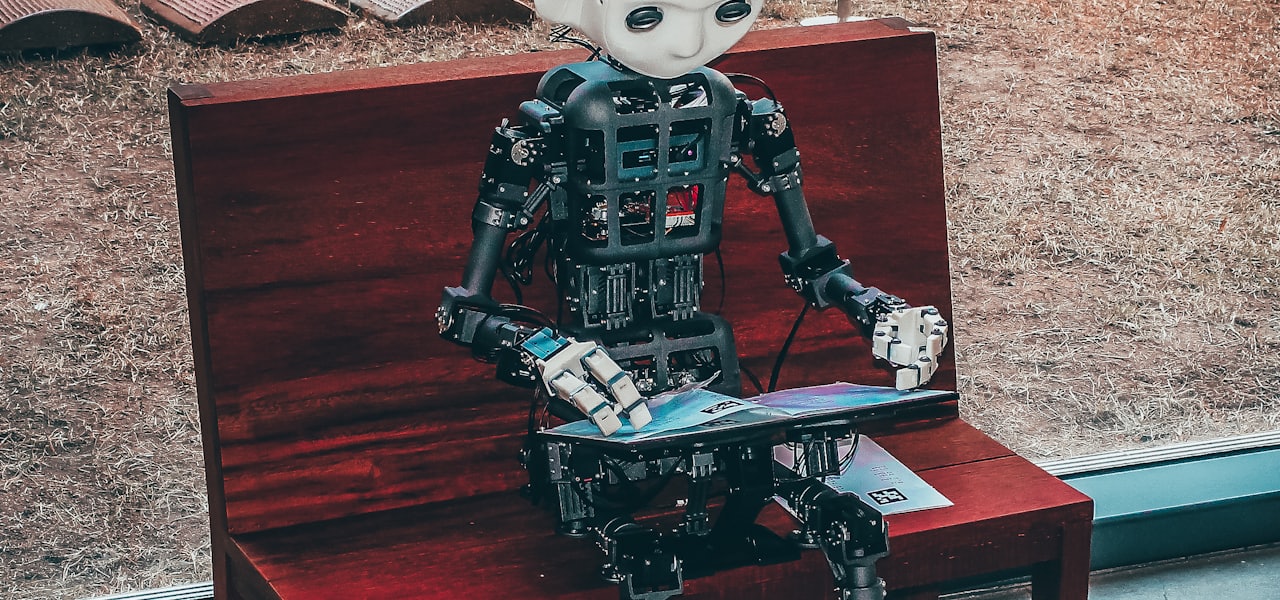
Embodied cognitive science
Interference (communication)